
What the bottle actually does
Most chemical cleaners are strong caustics or acids that generate heat to dissolve hair and grease. When they work, they typically burn a narrow channel through the middle of the clog, the buildup coating the pipe walls stays put, which is why the same drain slows down again weeks later.
When they don’t work, you now have a column of hot caustic liquid sitting in a blocked pipe. It softens PVC, corrodes older metal pipe and chrome trap parts, etches sink finishes, and it turns the clog into a hazard for whoever opens that line next, whether that’s you with a plunger or a plumber with a cable.
The one acceptable version
Enzyme and bacterial cleaners are a different product: they digest organic buildup slowly and won’t hurt pipes. They’re genuinely useful as monthly maintenance on a drain that’s already flowing. What they can’t do is clear an actual blockage, they’re prevention, not rescue.
What to do instead
Mechanical beats chemical every time, it removes the clog instead of drilling a hole through it.
Clean the stopper or strainer
For bathroom sinks and showers, the clog is usually hair at the stopper, inches from the surface.
Plunge with the overflow blocked
A cup plunger with steady strokes moves more clogs than any bottle.
Empty the P-trap
Bucket, slip nuts, done. This physically removes the buildup rather than dissolving a channel through it.
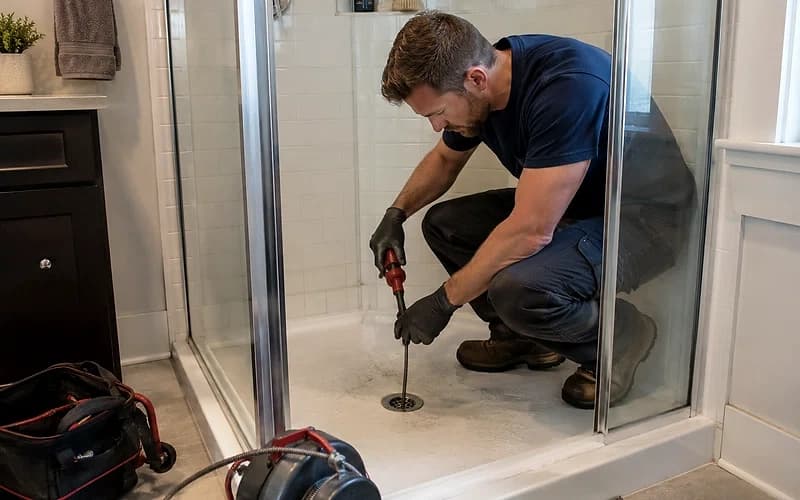
Snake the line
A hand auger clears the branch line. If clogs return after snaking, get a camera look, something (roots, a belly, buildup) keeps re-forming the clog.
“Chemical cleaner doesn’t remove a clog, it drills a hole through it and calls the job done.”
The bottom line
Skip the bottle. Fix this clog mechanically, use enzyme cleaner monthly if you want prevention, and treat any recurring clog as a line problem worth diagnosing, because paying to clear the same clog three times costs more than finding out why it keeps happening.