19
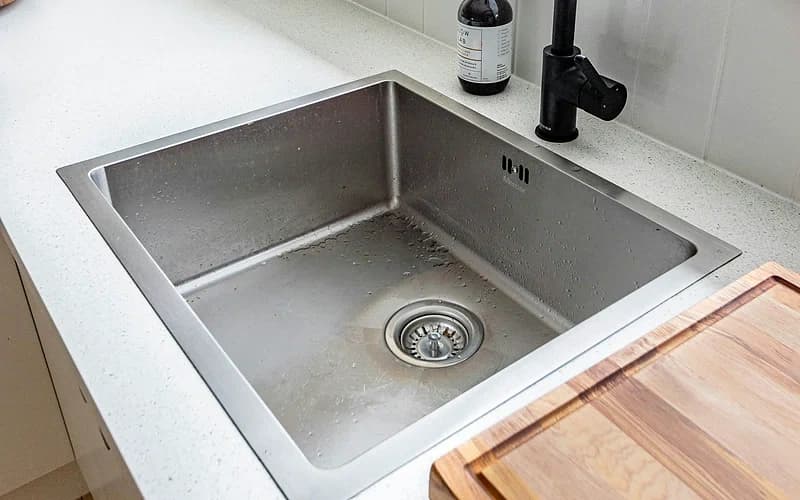
Why does my sink drain slowly?
Quick answerHair, soap film, food, grease, or buildup is narrowing the drain.
What to do next: For a bathroom sink, remove and clean the stopper first. For a kitchen sink, clean the trap if you are comfortable placing a bucket underneath and loosening the slip nuts. Avoid chemical drain cleaner. If two or more drains are slow, stop treating it as a single fixture issue and check the main line.
Read the full guide →20
Should I use chemical drain cleaner?
Quick answerI would avoid it in most cases.
What to do next: Try a plunger, cleaning the stopper, removing the trap, or using a small hand snake. Chemical cleaners can damage pipes, harm finishes, and splash back on you or the plumber who opens the line later. If the clog keeps returning, the line needs mechanical cleaning or inspection, not more chemicals.
Read the full guide →21
Why does my shower drain smell?
Quick answerThe trap may be dry, dirty, or growing biofilm.
What to do next: Run water for a minute to refill the trap, then clean hair and sludge from the drain. You can scrub the drain body with a brush and mild cleaner. If the smell is sewer-like and returns quickly, check whether the trap is leaking, siphoning dry, or venting poorly. That is when a plumber should look.
22
Why does my kitchen sink keep clogging?
Quick answerGrease and food buildup are the usual reason.
What to do next: Stop pouring grease down the drain, even with hot water. Clean the trap and disposal outlet, then snake the branch line if needed. If the sink drains well for a week and then slows again, the pipe may have heavy grease buildup and may need professional cabling or hydro jetting.
23
Can I snake a drain myself?
Quick answerYes for simple fixture clogs, but be careful.
What to do next: Use a small hand snake for bathroom sinks and tubs, and wear gloves and eye protection. Do not force the cable if it binds, and do not use a big rental machine unless you know what you are doing. If the clog is in the main line, a powered cable can hurt you or damage piping if handled poorly.
24
Why does my toilet clog all the time?
Quick answerIt could be paper, a weak toilet, a stuck object, or a drain issue.
What to do next: Use less paper and stop flushing wipes. If it still clogs, try a toilet auger, not a sink snake. If the auger catches something like a toy or cap, the toilet may need to be pulled. If other fixtures gurgle or back up, the problem is likely beyond the toilet.
25
What is the best plunger for a toilet?
Quick answerUse a flange plunger, not the flat cup kind.
What to do next: Make sure the rubber flange seats into the toilet outlet and keep enough water in the bowl to cover the plunger cup. Push gently first to burp air out, then use steady strokes. If plunging does not clear it after a few tries, switch to a toilet auger instead of overflowing the bowl.
26
Why are multiple drains backing up?
Quick answerThat usually means a main sewer clog.
What to do next: Stop running water, including laundry and dishwasher cycles. Check the lowest fixtures, like tubs, showers, or floor drains, because sewage often shows there first. Call a plumber to clear the main line and consider a camera inspection if it has happened before.
Read the full guide →27
Why does my washing machine drain overflow?
Quick answerThe standpipe or drain line cannot handle the discharge.
What to do next: Pause the washer and clean up water. The standpipe may be partially clogged, undersized, or poorly vented. A plumber can snake the laundry drain and check the standpipe height and trap setup. Do not seal the washer hose tight into the pipe, because it needs air and a proper gap.
28
Are flushable wipes really flushable?
Quick answerThey may flush, but they do not break down like toilet paper.
What to do next: Put wipes in the trash, even if the package says flushable. They catch on roots, rough pipe, and other debris, then turn into expensive clogs. If you already use them and have slow toilets or backups, stop now and consider having the line cleaned before it becomes a bigger issue.
Read the full guide →29
Why does my bathroom sink stopper keep clogging?
Quick answerHair and soap collect on the stopper rod.
What to do next: Pull the stopper if your sink allows it, or disconnect the pivot rod underneath. Clean the hair and sludge, then flush with hot tap water. A plastic drain cleaning strip can help. If it still drains slowly after the stopper is clean, remove and clean the trap.
30
Why does my tub back up when the toilet flushes?
Quick answerThat points to a shared drain or main line restriction.
What to do next: Stop using the toilet and other fixtures on that side of the house. If dirty water rises in the tub, treat it as sewage. Call for main line clearing. If this happens more than once, ask for a camera inspection so you know whether it is roots, a belly, a break, or buildup.
31
Why do I have drain flies?
Quick answerThey breed in organic sludge inside drains or unused fixtures.
What to do next: Clean the drain walls, overflow openings, and traps with a brush, not just liquid cleaner. Pouring cleaner down the middle often misses the slime on the pipe walls. If they are around a floor drain, make sure the trap has water. If they keep coming back, look for a hidden leak or dirty drain pan.
32
Why does my floor drain smell?
Quick answerThe trap may be dry, letting sewer gas in.
What to do next: Pour a few cups of water into the drain, then add a tablespoon of mineral oil to slow evaporation if it is rarely used. If the smell returns fast, the trap may be cracked, siphoned by venting trouble, or connected wrong. Sewer gas is not something to ignore if water does not fix it.
33
Why is my dishwasher draining into the sink?
Quick answerThe sink drain, air gap, disposal, or dishwasher hose may be blocked.
What to do next: Check the air gap on the sink deck if you have one, and clean it. If the dishwasher hose connects to a disposal, make sure the disposal drain path is clear. If the issue started after a new disposal, the installer may have forgotten to knock out the dishwasher inlet plug.
34
Can a clogged roof vent affect drains?
Quick answerYes, vents let drains breathe so traps do not gurgle or siphon.
What to do next: Signs include gurgling, slow drains, sewer smell, and traps losing water. Do not climb a steep or wet roof just to check it. A plumber can inspect the vent from the roof or use other tests. Sometimes the problem is not the vent, but a partial drain clog that acts like one.
35
Why is water coming out of my cleanout?
Quick answerThe sewer line is backed up and escaping at the cleanout.
What to do next: Stop using water in the house immediately. Leave the cleanout cap off if it is relieving pressure outside, but keep people and pets away. Call a plumber for main line clearing. If sewage reached soil or surfaces, clean and disinfect properly or call a cleanup company.
36
Do enzyme drain cleaners work?
Quick answerThey can help maintenance, but they do not clear serious clogs fast.
What to do next: Enzyme or bacterial cleaners are best for slow organic buildup, used regularly after the drain is flowing. They are not a fix for roots, foreign objects, collapsed pipe, or a blocked main. If water is standing, use mechanical clearing first.
37
Why is my sump pump discharge backing up?
Quick answerThe discharge line may be frozen, clogged, crushed, or routed poorly.
What to do next: Check the outside discharge point and make sure water can exit away from the foundation. In freezing weather, look for ice blockage. If the pump runs but water does not leave, unplug the pump before it burns out and call for help. A backup pump or battery backup is smart if your basement depends on it.
38
What is the difference between storm drain and sewer drain?
Quick answerSewer carries wastewater from the house, while storm drains carry rainwater.
What to do next: Do not connect sump pumps, downspouts, or yard drains into sanitary sewer unless your city specifically allows it. If a drain backup smells like sewage, treat it differently from rainwater. If you are unsure which system is backing up, a plumber or local utility can help identify it.