
Bathroom sink? It’s the stopper
Nearly every slow bathroom sink is a mat of hair and soap scum wrapped around the pop-up stopper and its pivot rod, sitting an inch or two below the drain opening. Pull the stopper (some lift straight out; others release by unclipping the pivot rod under the sink), clean off the sludge, and flush with hot tap water. Ninety percent of the time, that’s the whole repair.
Kitchen sink? It’s grease and food
Kitchen clogs build differently: grease cools and coats the pipe walls, then food particles stick to the grease. The buildup usually concentrates in the P-trap under the sink and the first few feet of the branch line behind it.
Put a bucket under the trap, loosen the slip nuts by hand or with channel locks, and empty it out. If the sink runs slow again within a week or two, the branch line itself needs a proper snaking, the trap was just the symptom.
The fix, in order of effort
Work down this list and stop when the water runs free.
Clean the stopper
Bathroom sinks: pull it, clean it, done. This is the five-minute fix that solves most slow drains.
Plunge it
Block the overflow hole with a wet rag, add a couple inches of water, and use a cup plunger with steady strokes.
Empty the P-trap
Bucket underneath, loosen the slip nuts, clear it out, and check the washers before reassembling.
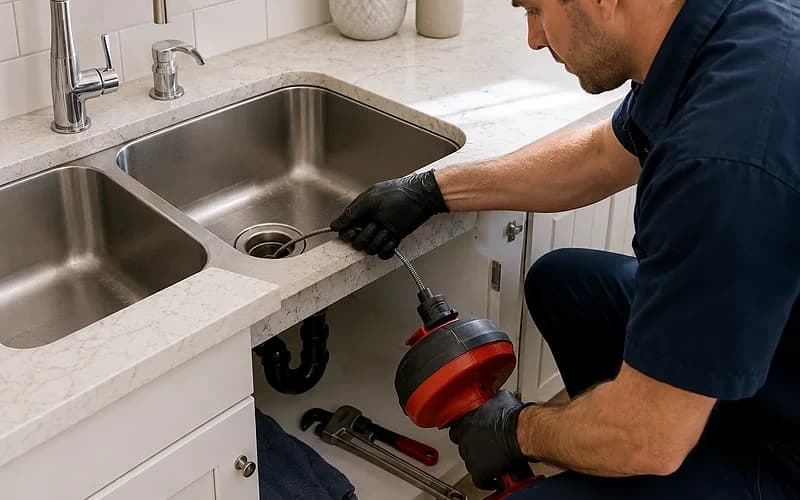
Run a small hand snake
A 15-foot hand auger through the trap arm reaches the branch line. Gloves and eye protection, and don’t force a cable that binds.
“One slow drain is a clog. Two slow drains is a system, and a different conversation.”
The bottom line
Skip the chemical cleaner, it damages pipes, rarely clears the real buildup, and makes the line hazardous for whoever opens it next. And if the clog keeps returning after mechanical cleaning, that’s the sign to put a camera in the line rather than paying to clear the same clog twice.