
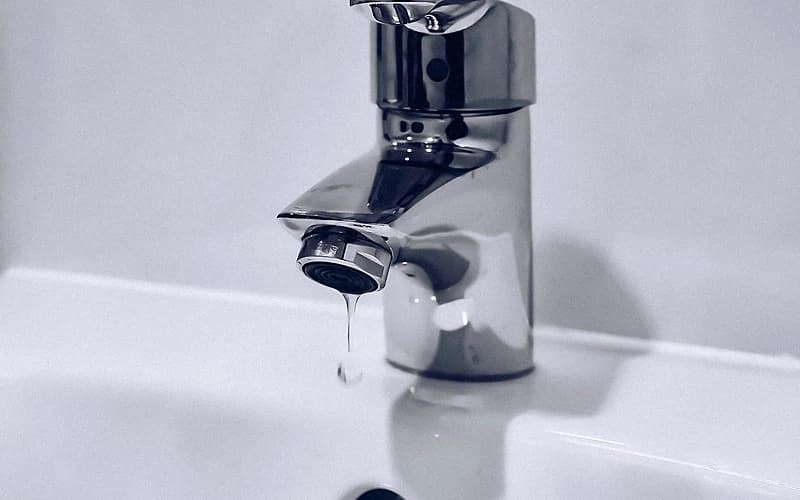
What’s actually happening inside the faucet
Every faucet seals water behind a small piece of rubber or plastic, a washer pressed against a seat in older two-handle faucets, or a cartridge with O-rings in most single-handle models. Thousands of on-off cycles, hard water, and grit slowly chew that seal up. Once it can’t close completely, water sneaks past and you get the drip.
That’s good news, because it means the fix is a part, not a faucet. Unless the faucet body itself is corroded or the finish is failing, replacing the cartridge or washer restores the seal and the drip stops.
Why you shouldn’t just live with it
A faucet dripping once per second wastes roughly 3,000 gallons a year, enough for about 180 showers, and it shows up on your water bill the whole time. On the hot side, you’re paying to heat that wasted water too.
Drips also get worse, not better. The escaping water erodes the seat it passes over, so a drip you could have fixed with a $6 washer can eventually require reseating or replacing the whole faucet.
The fix, step by step
For most faucets this is a 30-minute job with basic tools.
Shut off the water under the sink
Close both shutoff valves and open the faucet to confirm the water is fully off. If the valves won’t close completely, stop here, that’s a plumber visit, not a DIY teardown.
Identify the faucet brand and type
Look for a brand name on the faucet or handle. Single-handle faucets almost always take a cartridge; older two-handle faucets use washers and stems. A photo at the parts counter saves a second trip.
Replace the cartridge or washer
Plug the drain so screws can’t escape, disassemble the handle, and swap the part like-for-like. A dab of plumber’s grease on new O-rings helps them seat.
Test and check for leaks below
Turn the shutoffs back on slowly, run the faucet, then check under the sink with a dry paper towel at each connection.
“A six-dollar cartridge today is the cheapest plumbing repair you will ever make.”
The bottom line
If the drip survives a new cartridge, the valve seat is likely worn, and if the faucet is 15+ years old, replacement usually beats another repair. Either way, don’t let it run: the water bill, the stained sink, and the eroded seat all cost more than the fix.