
The warning signs, in escalating order
These usually arrive in roughly this sequence, the earlier you act, the cleaner the fix.
Gurgling toilets
Air being pulled through the toilet’s trap when another fixture drains means the line isn’t venting or flowing normally. This is the earliest, cheapest warning you’ll get.
Sewer smell from drains
A blocked line pushes gas back through the traps. Persistent smell near floor drains or tubs is a line symptom, not a cleaning problem.
The slowest fixtures slow together
When more than one drain slows in the same week, stop thinking about individual fixtures.
Water appears where you didn’t run it
The tub fills when the toilet flushes; the floor drain backs up when the washer discharges. The main line is full and wastewater is finding the lowest exit.
Water at the outdoor cleanout
Sewage escaping at the cleanout cap in the yard means the line is fully blocked downstream. Stop all water use immediately.
Clearing vs. actually fixing
A cable machine (snaking) opens the clog and gets your house draining today, it’s the right emergency move. But a cable drills a hole through the blockage; it doesn’t always remove what built it, and it tells you nothing about why it formed. Hydro jetting cleans the pipe walls and does better on grease and roots, in lines strong enough to take it.
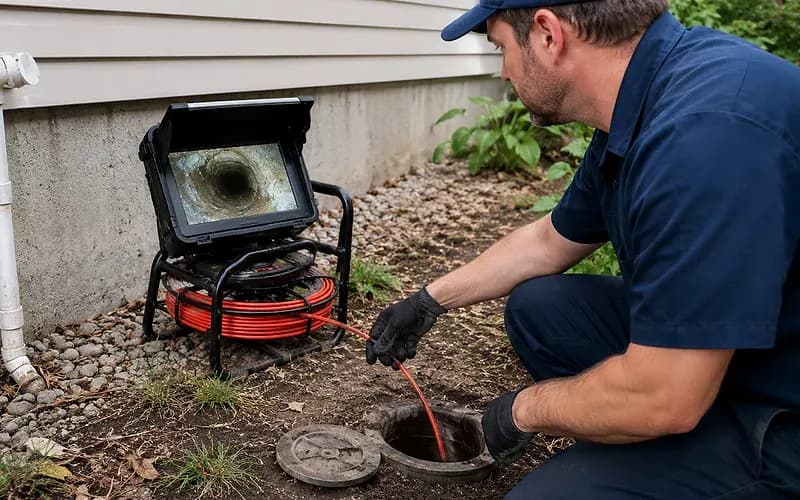
That’s why the rule of thumb is: first clog, clear it; second clog, camera it. A camera inspection after clearing shows pipe material, root intrusion, bellies, and breaks, with a recording and a located depth, so a recurring problem gets a targeted fix (spot repair, lining, or replacement) instead of a subscription to emergency clearings.
What to do right now
Assume everything backing up is sewage and act accordingly.
Stop using water
Every gallon you send down, laundry especially, comes up at the lowest fixture.
Keep people and pets away from backup water
Treat it as contaminated. Disinfect anything it touched.
Call for main line clearing
Same-day availability depends on demand. Mention any cleanout locations you know; it speeds the job up.
If this is round two, add the camera
Ask for the recording and the located depth of whatever it finds.
“First clog, clear it. Second clog, camera it. Paying to clear the same line three times is the most expensive way to avoid a diagnosis.”
The bottom line
A sewer clog never improves on its own, the only variables are when it backs up and what’s on the floor when it does. Act at the gurgling stage and it’s a service call; wait for the tub to fill and it’s a cleanup.