109
How do I know if my sewer line is clogged?
Quick answerMultiple drains backing up is the big clue.
What to do next: Watch for tubs filling when toilets flush, floor drains backing up, toilet gurgles, or sewage smell. Stop using water and call a plumber. If the clog clears but returns, get a camera inspection rather than paying for repeated blind cleanings.
Read the full guide →110
What causes sewer backups?
Quick answerRoots, grease, wipes, collapsed pipe, bellies, and foreign objects are common causes.
What to do next: A cable can open many clogs, but it does not always tell you why it happened. If the backup is severe, recurring, or messy, ask for a camera after cleaning. The camera should show pipe material, slope, roots, breaks, and the location of the issue.
111
Should I get a sewer camera inspection?
Quick answerYes for repeat clogs, home purchases, or unknown sewer condition.
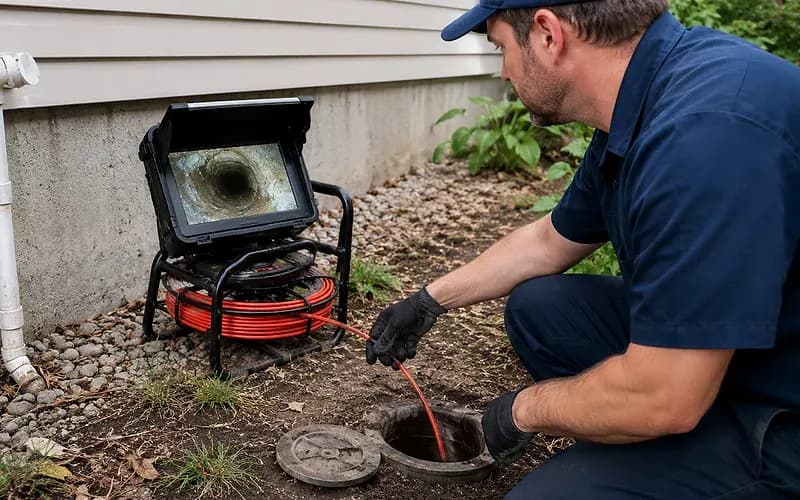
What to do next: The line usually needs to be cleared enough for the camera to pass. Ask for a recording or photos and a located depth if a defect is found. A camera is especially useful before buying an older home or before approving a costly sewer repair.
112
Are tree roots really a problem?
Quick answerYes, roots are one of the most common sewer line problems.
What to do next: Roots enter through joints, cracks, or broken pipe. Snaking may clear them temporarily, but they often grow back. Options include regular maintenance, hydro jetting, spot repair, lining, or replacement depending on pipe condition. A camera tells which path makes sense.
113
What is hydro jetting?
Quick answerIt cleans pipes with high-pressure water.
What to do next: Jetting is great for grease, sludge, and roots in pipes that are strong enough. It should usually follow or include camera inspection if the pipe condition is unknown. Do not jet a collapsed or fragile line without knowing the risk.
114
Is snaking the same as cleaning the line?
Quick answerNot always. Snaking opens the clog, jetting cleans the walls better.
What to do next: A cable is often the fastest emergency fix. If the problem is grease or sludge, jetting may last longer. If roots or broken pipe are involved, neither is a permanent fix by itself. Ask what came back on the cable and whether a camera is recommended.
115
Why does my basement floor drain back up?
Quick answerIt may be the lowest point where a main line backup appears.
What to do next: Stop running water. If it is sewage, keep people and pets away and disinfect properly. Call a plumber to clear the main. If rain causes it, ask whether storm water, foundation drains, or a backwater valve issue is involved.
116
Who is responsible for the sewer line?
Quick answerUsually the homeowner owns the lateral from house to city connection.
What to do next: Rules vary by city, so call the local utility or public works department if the problem may be near the street. Many homeowners are surprised that the sewer lateral is their responsibility. Check whether you have sewer line coverage before an emergency.
117
What is a cleanout?
Quick answerIt is an access point for clearing or inspecting the drain line.
What to do next: Look for capped pipes outside, in the basement, crawl space, garage, or near bathrooms. Keep cleanouts accessible and do not bury them. If you do not have a usable main cleanout, adding one can make future sewer work faster and less expensive.
118
Why does sewer smell come from a drain?
Quick answerA dry trap, dirty drain, vent issue, or cracked pipe can cause it.
What to do next: Run water into the drain to refill the trap, then clean the drain and overflow. For rarely used drains, add a little mineral oil after water. If smell persists, call a plumber to check venting, trap integrity, and hidden leaks.
119
What is a belly in a sewer line?
Quick answerIt is a low spot where waste and water sit instead of flowing away.
What to do next: A camera inspection can show standing water in the line. Small bellies may be maintained, but bad ones cause repeated clogs and need repair. Ask the plumber to locate the section and explain whether the slope can be corrected.
120
What is trenchless sewer repair?
Quick answerIt repairs or replaces sewer pipe with less digging.
What to do next: Common methods include pipe lining and pipe bursting. Trenchless is not right for every line, especially if the pipe is collapsed, badly bellied, or improperly sloped. Get camera proof and compare with traditional excavation before deciding.
121
Do I need a backwater valve?
Quick answerIf city sewer backups are a risk, it can protect your home.
What to do next: A backwater valve lets sewage flow out but helps stop city sewer water from flowing back in. It must be installed in the right location and kept accessible for maintenance. Ask a local plumber whether your code or flood risk makes it recommended.
122
How does septic differ from city sewer?
Quick answerSeptic treats wastewater on your property, so maintenance is on you.
What to do next: Know where the tank and drain field are. Do not flush wipes, grease, feminine products, or harsh chemicals. Spread laundry loads out. If drains are slow, the yard is soggy, or alarms sound, call a septic professional quickly.
123
How often should a septic tank be pumped?
Quick answerOften every 3 to 5 years, but usage and tank size matter.
What to do next: A septic company can inspect sludge level and recommend a schedule. Large households, garbage disposal use, and small tanks need more frequent pumping. Keep records of pumping and inspections.
124
When does a sewer line need replacement?
Quick answerReplacement is likely if the pipe is collapsed, badly broken, or repeatedly failing.
What to do next: Do not approve major replacement based only on a clog. Ask for camera footage, located problem spots, depth, and repair options. Sometimes a spot repair is enough. Sometimes old pipe is failing in multiple places and full replacement is smarter.
125
Why is my cleanout cap popping off?
Quick answerPressure from a backed-up line may be pushing it off.
What to do next: Do not screw it down tight and keep using water. That can force sewage into the house. Stop water use and clear the blockage. After cleaning, replace damaged caps but keep the cleanout accessible.
126
How do I know if the city sewer is the problem?
Quick answerIf neighbors are affected or backups happen from the street side, call the utility.
What to do next: Ask nearby neighbors if they have backups. Call the city sewer department and report it, especially if sewage is coming from a cleanout near the street. A plumber can also camera the private lateral to show whether the issue is on your side or beyond the connection.